Why Salamanta Script is a Go-To for Warm, Inviting Design
You know the feeling when you see a piece of design that just feels… right? It’s not necessarily loud or over-the-top, but it has a certain warmth, an approachability that makes you want to look closer. That’s the kind of magic a well-chosen script font can bring to a project. Among the sea of options, Salamanta Script stands out as a particularly versatile and beautiful choice for designers and creators who want to add a touch of elegance without losing that friendly, human touch.
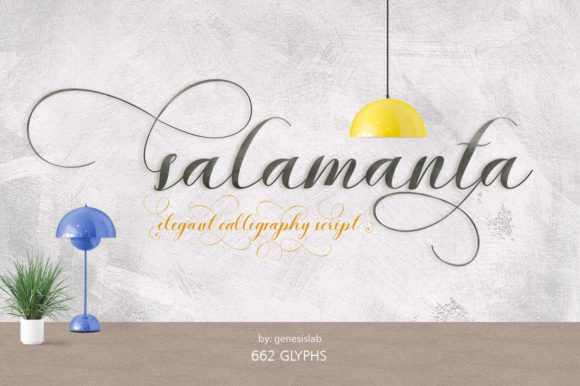
At its core, Salamanta is a modern script font. Think of it as the sophisticated cousin of a casual handwritten font. It has the flowing, connected letterforms we expect from a script, but with a cleaner, more polished execution. The strokes have a natural rhythm, with just enough variation in thickness to feel organic and alive, not sterile or mechanical. It avoids the overly flourished, hard-to-read look of some calligraphic scripts, aiming instead for a balanced, contemporary elegance. This isn't a font that tries to be the loudest voice in the room; it's the one that invites you in for a conversation.
Finding the Perfect Project for This Creative Font
The real strength of Salamanta Script lies in its adaptability. It’s a premium font that feels at home across a surprising range of applications. For logo design, especially for brands in the lifestyle, wedding, beauty, or artisan food spaces, it can instantly establish a sense of craft and personal attention. Imagine it on the logo for a boutique bakery or a handmade jewelry brand—it communicates quality and care without a single word of copy.
Beyond logos, this script font excels in the world of packaging design. A label for a specialty coffee, a jar of homemade jam, or a candle gets an instant upgrade. It adds that "small-batch" feel, even for larger brands aiming for a more personalized aesthetic. In editorial design, think of pull quotes in a magazine or chapter headings in a cookbook. Used sparingly, Salamanta can break up the monotony of body text, guiding the reader's eye and adding a layer of visual interest.
For the digital realm, it’s a powerhouse for social media graphics. A quote card, a sale announcement, or a featured blog post title rendered in Salamanta will stand out in a fast-scrolling feed. Its warmth translates beautifully to screen, making digital content feel more personal and engaging. It’s also a fantastic choice for web design accents—like a hero banner headline on a landing page or a special call-to-action button—where you want to draw immediate, friendly attention.
And let’s not forget the personal projects that fuel so much creativity. This is where Salamanta truly shines for hobbyists and crafters. It’s perfect for invitations (weddings, birthdays, graduations), greeting cards, art prints, and party decor. The font’s inherent celebration of life’s moments makes it a natural fit. For small business owners creating thank-you cards, loyalty program tags, or branded stickers, it adds a professional yet heartfelt touch that customers remember.
Practical Tips for Using Salamanta in Your Work
Knowing where a font works is one thing; knowing how to use it effectively is another. The first rule with any display font like Salamanta is moderation. Its beauty is in its detail, so using it for large blocks of body copy is a recipe for disaster. It would become visually noisy and incredibly difficult to read. Reserve it for headlines, subheadings, logos, and short phrases where its personality can shine without overwhelming the viewer.
This leads directly to font pairing. Salamanta Script needs a stable partner. Pair it with a clean, neutral sans serif font for body text. Think of fonts like Montserrat, Open Sans, or Lato. The contrast between the expressive script and the straightforward sans serif creates a clear visual hierarchy, making your design both beautiful and functional. For a slightly more classic or editorial feel, you could pair it with a simple, readable serif font like Georgia or Merriweather. The key is to let Salamanta be the star and have its supporting cast play a complementary, not competing, role.
Before you dive in, take a moment to explore what’s included. Many premium fonts like Salamanta come with more than just the basic letters. Check for alternate characters, swashes, and ligatures. These are the extras that let you customize the look—adding a flourish to a capital letter or connecting certain letter pairs more elegantly. Because it’s PUA encoded, you can access all of these glyphs easily, which is a huge plus for detailed work in design software.
Finally, always test for readability. Zoom out on your design. Can you still read the word or phrase clearly at a glance? If not, simplify. Maybe you don’t need the most elaborate swash on the ‘S’. Sometimes, the basic, clean version of the script is all you need. Also, consider the commercial licensing. If you’re using it for a client project, a product for sale, or marketing materials for your business, ensure your license covers that use. It’s a small step that protects your work and respects the font designer’s craft.
In the end, choosing a typeface like Salamanta Script is about more than just picking something pretty. It’s a strategic decision that influences brand perception, guides the viewer’s eye, and creates an emotional response. When used thoughtfully, it becomes a key part of your design assets, helping to build a cohesive and memorable brand identity